Extending a listed building with a conservatory or an orangery is possible, but there are lots of things you need to consider before you start. As expert heritage joiners, we’ve carried out many different extension projects on listed buildings with our bespoke orangeries and conservatories.
Here’s our expert guide detailing everything you need to know if you’re looking to extend a listed building with a conservatory or orangery.
In principle, a listed property extension is possible but needs careful consideration and planning. Any modifications to a listed property require that you obtain Listed Building Consent.
In particular, with new conservatory extensions and Grade II category-listed buildings, Listed Building Consent is always necessary for any changes, including a sunroom or orangery extension. Put simply, anything beyond routine maintenance, such as painting or decorating, will require consent from your local authority.
A listed building has special architectural or historic interest, and it is essential to preserve it for future generations without making alterations that could compromise its originality. However, if you want to extend your Grade II listed property, obtaining consent and ensuring proper design is crucial. You can extend your listed property as long as the proposed extension aligns with its historic style. Collaborating with a heritage joinery expert can help improve the chances of obtaining consent.
When planning a conservatory for a listed building, it is essential to consider the visual impact and how the new structure will interact with the existing architecture. The conservatory design must respect the original style and materials and enhance the overall aesthetic. For example, a glass and timber conservatory harmoniously balances a property’s historical integrity while allowing more natural light to flood the interior. It is advisable to consult with conservation specialists for insights into the best practices for integrating modern features without compromising the building’s heritage. In Yorkshire, this is something we can guide you on.
Adding an extension to a listed building requires Listed Building Consent, which is not always straightforward. However, according to Historic England, nearly 90% of Listed Consent applications gain approval.
Let’s say you are considering a conservatory extension to a Grade II Listed home; consent is usually granted when it is a conservatory-style kitchen extension, aesthetically matching garden room, replacement sunroom or an enhancing structure that allows sight of original features, walls and structural attributes. To get the Consent, you need to show that changes to the property will maintain its historical integrity. The process involves the following:
When contemplating an extension for your listed property, a glass extension is a beautiful way to envision enriching your space, inviting light and a sense of tranquillity into your home. As long as it aligns with the traditional aesthetic of your listed property, a conservatory or orangery extension is ideal- terms often used interchangeably. Where an orangery usually possesses more brick or stone in its construction with a solid flat roof or roof-lantern, a conservatory generally possesses more glass and a sloping roof. So, if you are looking for inspiration, consider a lean-to conservatory for narrow areas with restricted space; an orangery is ideal for kitchen extensions, or a traditional conservatory serves well for every extended living space.
For more inspiration, check out our guide to extending with an orangery or a conservatory.
Difference Between Orangeries & ConservatoriesYou can add a conservatory to your Grade II or listed property as long as you first acquire Listing Building Consent from your local council. You can find more advice on your local authority via the Government Planning Portal. The fundamental requirement is that the conservatory should harmonise with the traditional aesthetic of the property, typically being constructed of hardwood timber and glass.
Our conservatory designers, manufacturers, and installers, based in Yorkshire, have decades of unparalleled experience with heritage, period, and listed properties. We embrace the challenge of navigating planning and Listed Building Consent, elevating your vision and seamlessly guiding you toward success. We will help you add a new conservatory or sunroom extension to your listed property from design to completion. We will evaluate your property, understand your needs and solve any design obstacle for your new sunlit structure, ensuring every detail, insulation technique, and orientation is thoughtfully considered to enrich the beauty of your magnificent property.
Enquire Now
Conservatory extensions should reflect your listed property's size in scale, materials and positioning, not detracting from its character.
Our Projects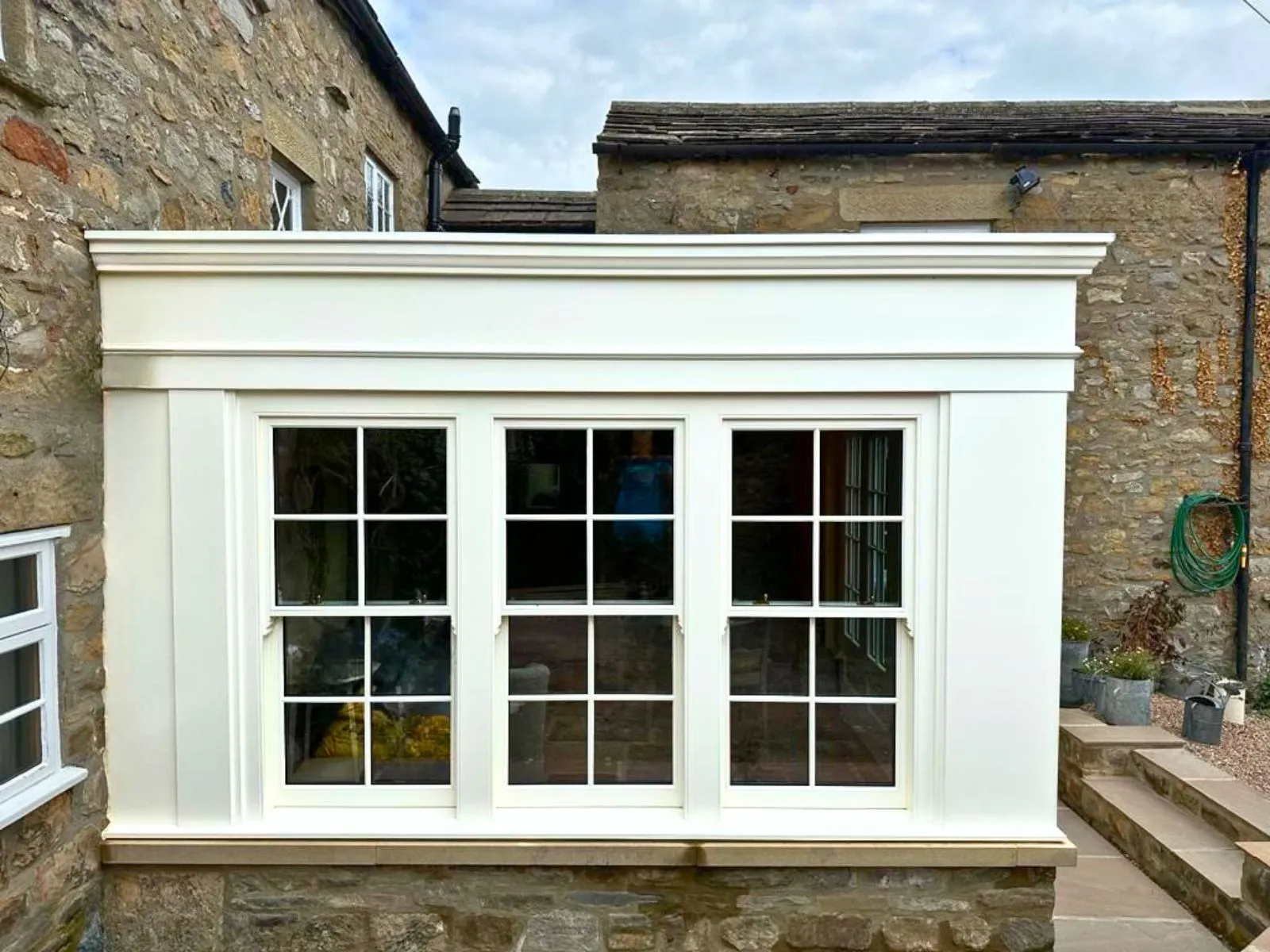
An orangery extension increases living space while preserving the architectural character of your listed property. When replacing an unsuitable extension, a new structure can enhance the original design, making it look like it has always been there.
See ProjectCatch up on more of the latest news from DHW Joinery.


