What are Georgian Windows? Georgian windows are the elegant multi-paned windows that defined British domestic architecture during the Georgian era, roughly from 1714 to 1830. Characterised by their symmetrical layouts, slender glazing bars, and rows of small rectangular panes, they remain one of the most recognisable and admired architectural features in the country.
You’ll find them gracing the terraced townhouses of York and Harrogate, the merchant properties of Leeds and Hull, and the grand country estates that pepper the North Yorkshire landscape. Nationally, the Royal Crescent in Bath and the Georgian squares of Edinburgh stand among the most celebrated examples of the style in full effect.
In this guide, we’ll walk you through everything you need to know: how to identify Georgian windows, the differences between styles and periods, your options for restoration or replacement, and what to consider when it comes to planning permission — with a particular focus on authentic timber craftsmanship.
The defining characteristic of a Georgian window is its division into multiple small panes of glass, arranged in a regular grid. The most iconic configurations are the three-over-three and six-over-six sash — three or six panes in the upper sash and three or six in the lower. Although four-over-four and eight-over-eight arrangements were also common, depending on the scale of the property.
Key features to look for include:

Glazing bars: Slender, delicate timber bars that divide the sashes into individual panes. On authentic originals, these are finely moulded with an ovolo or lamb’s tongue profile — a detail that is unmistakably hand-crafted. You can see the depth and shadow lines clearly on this handcrafted grooved frame.
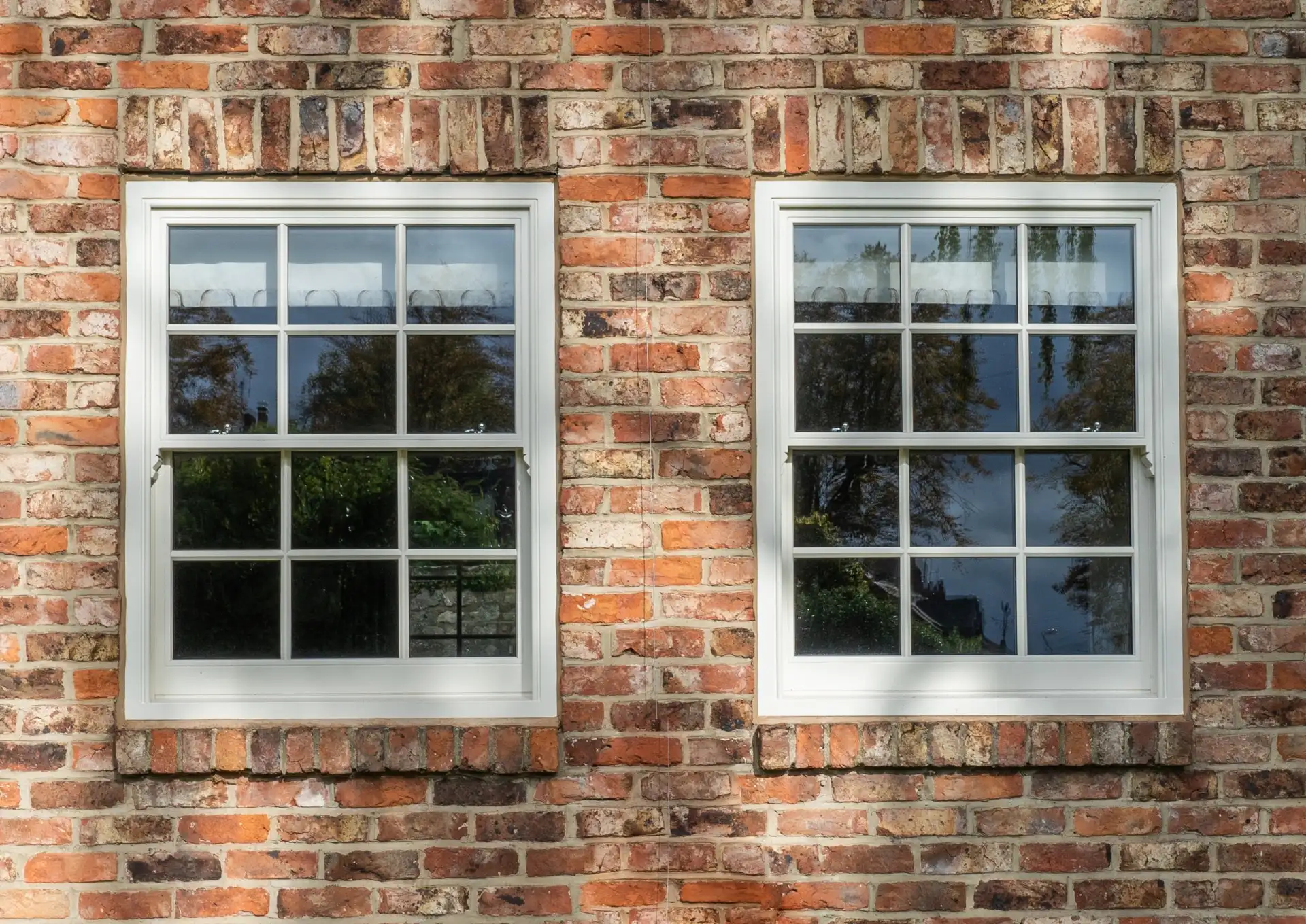 Proportions: Georgian windows are typically taller than they are wide, set into well-proportioned openings that follow classical rules of symmetry. Here, you see the popular three-over-three pane arrangement sash window replaced sympathetically to improve aesthetics and thermal efficiency, in the correct proportions.
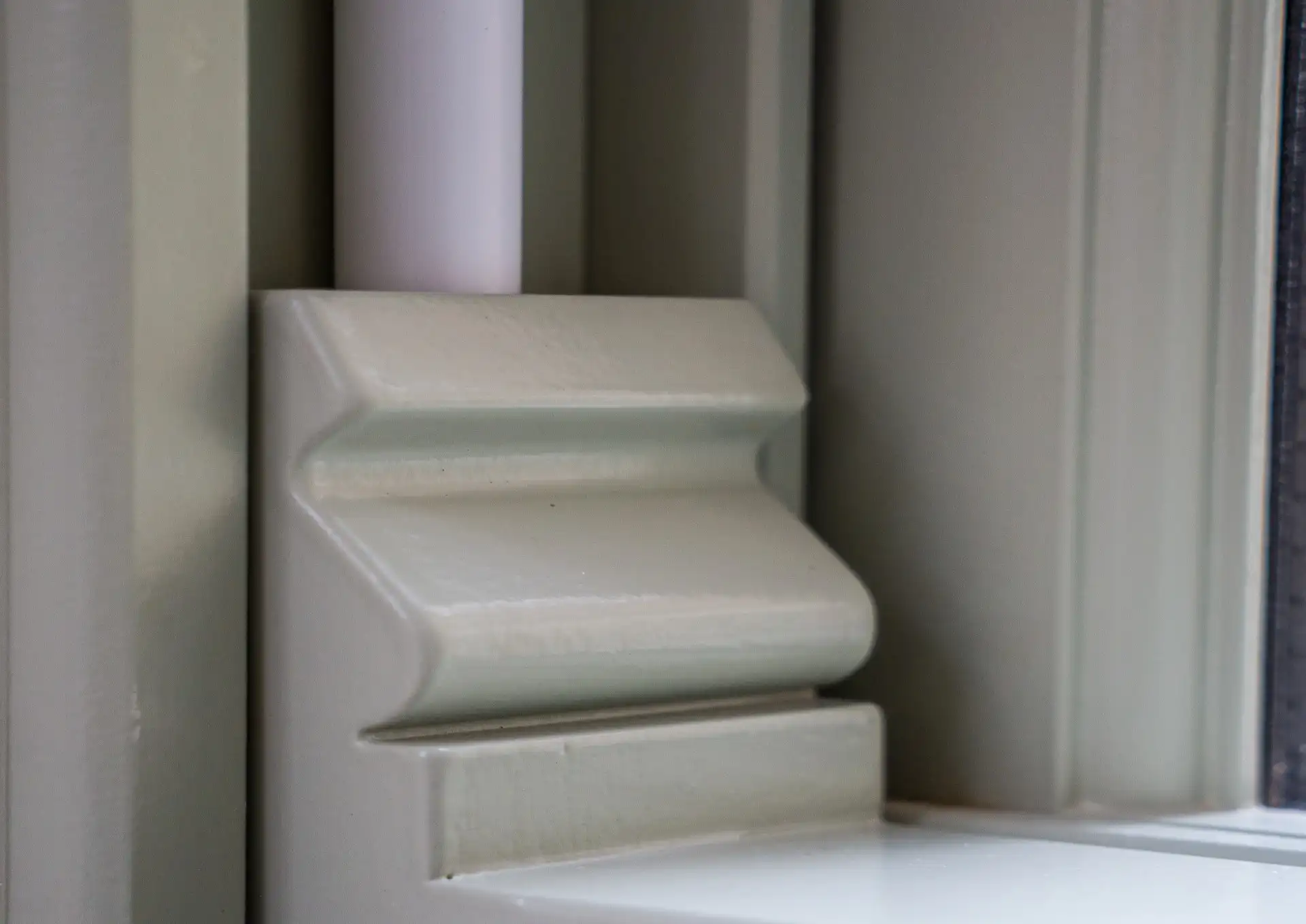 Sash mechanism: The vast majority of Georgian windows feature double-hung vertical sashes, in which both the upper and lower sashes slide independently, counterbalanced by hidden weights on cords or chains within the box frame. True replacements should replicate these features.
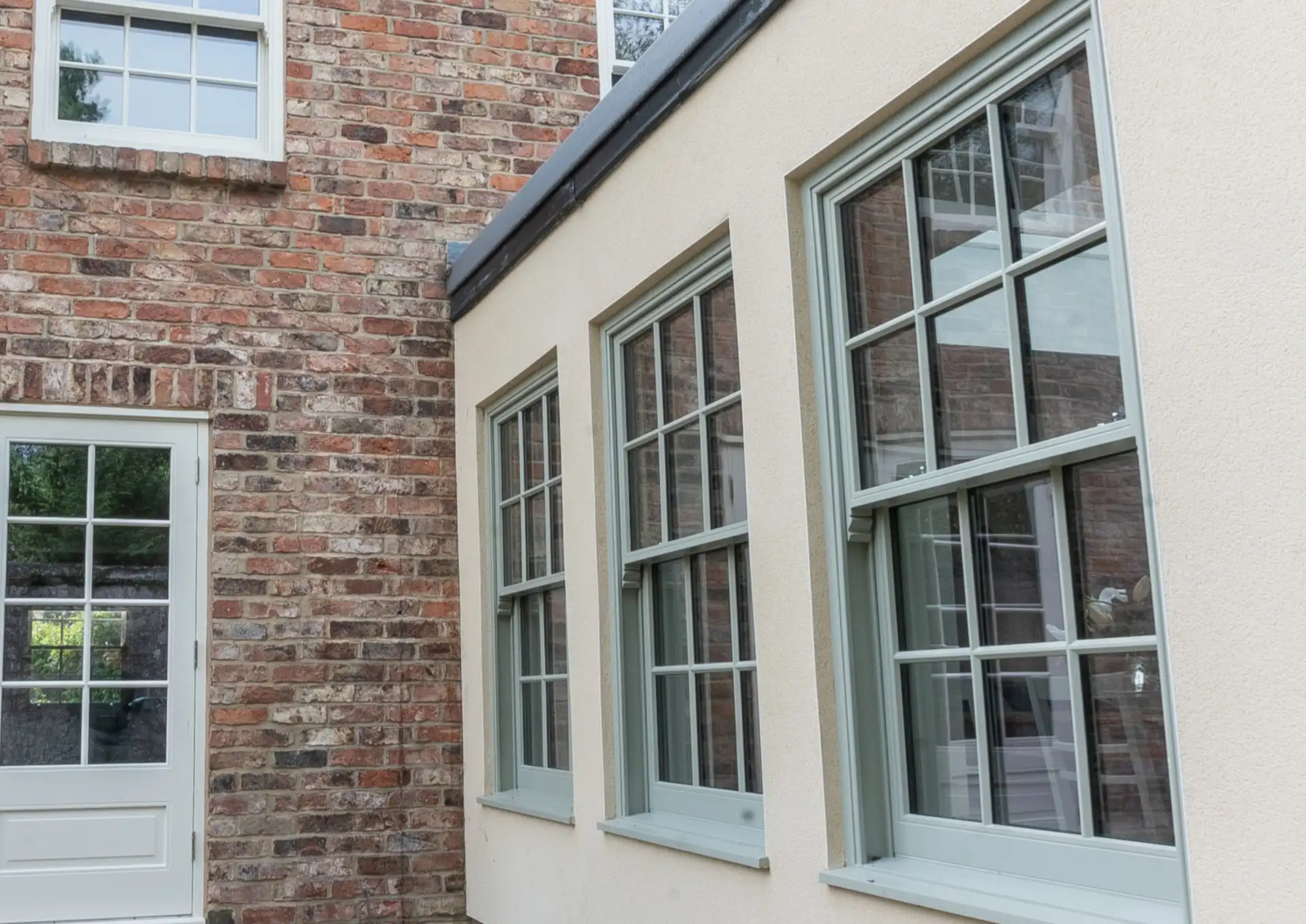 Timber construction: Authentic Georgian windows were built almost exclusively in timber — typically painted softwood or, in grander properties, hardwood. The box frame, sash, and glazing bars are all wood. This is not just a historical footnote; it remains the preferred material for period-accurate replacement today.
The answer is largely practical. During the 18th century, glass manufacturing technology was incapable of producing large, flat sheets of clear glass. Crown glass — made by spinning molten glass into a flat disc — was the standard method, and it limited individual pane sizes to roughly 20–30cm in each dimension.
By dividing windows into grids of small panes and holding them in place with slender timber glazing bars, Georgian builders maximised light while working within the constraints of what could actually be made. It was a marriage of ingenuity and craftsmanship, and the aesthetic result has endured for over three centuries.
As the 19th century progressed and glass manufacturing improved, window design evolved. By the Victorian era (1837–1901), larger panes became achievable, and window styles shifted accordingly.
Victorian sash windows tend to have much heavier horn joinery on the upper sash corners — a structural necessity for the larger panes — which is a quick visual giveaway when comparing the two styles side by side.
Edwardian windows (1901–1910) often introduce decorative top-lights, coloured or leaded glass in upper panes, and a lighter, more ornate feel compared to Victorian sobriety.
| Feature | Georgian | Victorian |
|---|---|---|
| Pane count | 6-over-6, 4-over-4, 8-over-8 | 2-over-2, or a single large pane per sash |
| Glazing bars | Slender, multiple | Fewer or none |
| Overall look | Grid-like, delicate | Simpler, more open |
| Proportions | Tall and narrow | Often wider |
There is sometimes confusion about whether all Georgian windows are sashes. The answer is no, though sashes were by far the more common form in urban and formal domestic settings.
Georgian sash windows use a sliding vertical mechanism, with two sashes that move up and down within a box frame. They were the prestige option, associated with substantial town and country properties.
Georgian casement windows are side-hung, opening outward on hinges. These were more common in rural cottages, farmhouses, and vernacular buildings — the kind of properties you find throughout the Yorkshire Dales and the North York Moors. They often featured the same small-pane, glazing-bar aesthetic as sashes but in a simpler opening mechanism.
If you have a historic rural property in North Yorkshire or the Yorkshire Wolds, you are more likely to have original casements than sashes. Both styles can be authentically replicated in timber today.
This is one of the most important distinctions for homeowners considering replacement windows, and one that most competitors gloss over.
Real (structural) glazing bars are integral to the window — they divide the glass into separate panes, each independently glazed into its own rebate. This is how original Georgian windows were made, and it is the only approach that produces a result indistinguishable from the original when viewed up close.
Applied (cosmetic) bars, sometimes called mock bars or stick-on bars, are decorative strips fixed to the surface of a single large pane of glass. They give the appearance of a divided window from a distance but lack the shadow lines, depth, and authenticity of real bars.
For double glazing, there is a third option: Georgian bars inserted between the glass panes of a sealed unit. These sit within the cavity and give a cleaner internal appearance, though they still lack the three-dimensional quality of true structural bars.
In conservation areas and listed buildings, applied or cavity bars are rarely acceptable. Planning authorities and historic building officers in Yorkshire — including those covering the historic cores of York, Richmond, and Skipton — typically require like-for-like replacement using real timber glazing bars. A good joinery company will advise you on what is and isn’t appropriate for your specific property before a single measurement is taken.
The answer depends on your property’s status and location. Standard properties (not listed, not in a conservation area): In most cases, replacing windows falls under permitted development and does not require planning permission. However, the replacement must be in keeping with the character of the property.
The governing guidance is set out by Historic England, whose advice notes firmly favour the repair and retention of original timber joinery wherever possible. If in doubt, contact your local planning department or a heritage-experienced joinery contractor before proceeding.
More About Windows & Listed PropertiesIt’s a question we’re asked regularly across our work in Yorkshire, and for most homeowners the answer comes down to one thing: whether the existing timber can be made to perform properly long-term — or whether a like-for-like replacement in timber is the more honest solution.
At DHW Joinery, the majority of the work we carry out is replacement rather than repair. That’s not a commercial preference — it’s simply the reality of what we encounter on site. Georgian windows in conservation areas, listed buildings, and heritage properties across Yorkshire are frequently beyond the point where surface restoration will deliver lasting results. Decades of deferred maintenance, incompatible previous repairs, or the simple reality of 200-year-old timber mean that replacement is often the more responsible recommendation.
Crucially, replacing a Georgian window does not mean compromising on authenticity. Working within conservation areas and with listed building consents is something we do routinely. Planning authorities and heritage officers require like-for-like replacement in timber — and that is precisely what we deliver. Real structural glazing bars. Correctly profiled mouldings. Slim sightlines that match the original openings. The shadow lines and visual depth that only a true divided-light timber window can produce.
What a well-made timber replacement cannot replicate is original crown glass with its characteristic imperfections — but for a household that gains draught-free performance, modern security, and a window that will last another generation, that is almost always the right trade to make.
Explore Replacement ProjectsGarden room with slim-profile Georgian style casement windows and French doors, a style that works beautifully in contemporary extensions.
The popularity of Georgian window styles on new residential developments has grown considerably in recent years. Housebuilders across Yorkshire and the wider North of England are increasingly specifying Georgian-style windows — particularly on neo-traditional developments and executive housing — because the style carries a sense of permanence and quality that more contemporary window designs often lack.
For new build applications, getting the proportions right is critical. Authentic Georgian design follows classical ratios: windows should be vertically proportioned, and pane heights and widths should relate logically to the overall opening size. An incorrectly proportioned six-over-six on a new build will look immediately wrong to a trained eye.
Timber remains the material that best achieves these proportions with the necessary slenderness of glazing bars. Engineered timber, in particular, offers the stability and longevity required for a new-build window while maintaining an authentic aesthetic.
Explore Our WindowsHere is a practical checklist you can use without any specialist knowledge:
If in doubt, a specialist joinery company or a heritage consultant can carry out a more thorough assessment.
Request Our HelpWhether you are looking to restore original Georgian windows in a listed farmhouse in the Yorkshire Dales, replace failed sashes in a conservation area property in York or Harrogate, or specify authentic timber Georgian windows for a new build development in West or South Yorkshire, DHW Joinery has the knowledge and craftsmanship to advise you properly.
We work across Yorkshire, and the wider North of England, and every window we make is crafted in timber — because for Georgian windows, timber is not just traditional, it is the right material.
Get in touch with our team to discuss your project. We are happy to visit your property, review your planning position, and give you honest guidance before any commitment is made.
Make An Enquiry TodayCatch up on more of the latest news from DHW Joinery.


